Saving a Tooth Sentenced to Extraction — Crown Lengthening and Resin Wall Build-up
A severely decayed tooth with gum overgrowth was saved through crown lengthening surgery and resin wall construction, avoiding extraction.
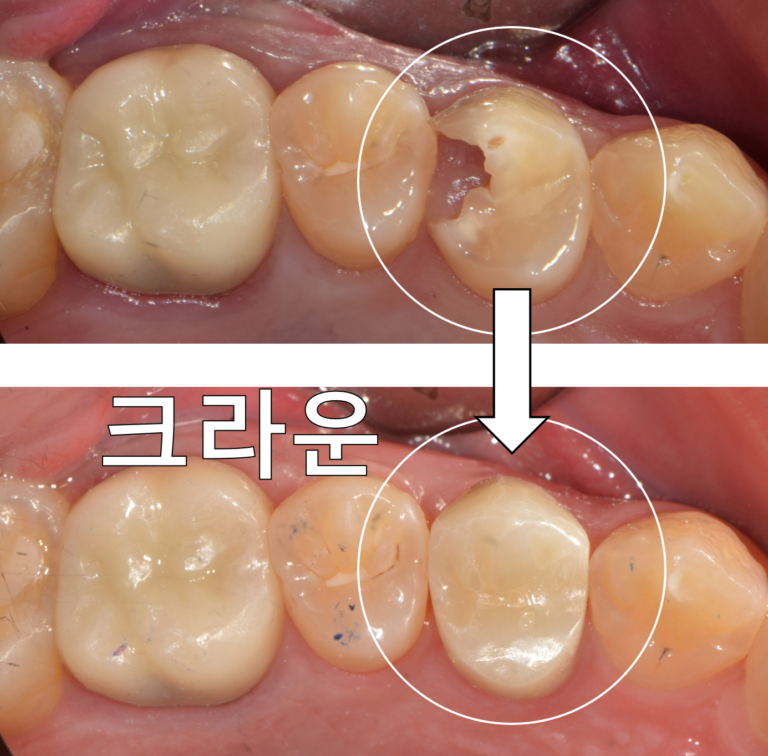
Hello. I am Dr. Kang Seokhoon, Director of TTE Dental Clinic, where we never give up on saving your natural teeth.
When severe decay causes a tooth to break and it is left untreated, you may eventually experience the alarming situation of gum tissue growing into the hole where the tooth once was. In dental terminology, this is called gum tissue proliferation. When this occurs, bleeding happens every time an instrument touches the area, and the lack of visibility dramatically increases the difficulty of treatment.
These are exactly the kinds of cases where you are likely to hear: "The decay is too extensive. The tooth needs to be extracted."
However, if the root of the tooth is still strong, it is too early to give up. Today, I will share the story of how we saved a tooth that was so severely affected that the gum had virtually engulfed it, using precise gum surgery and resin wall construction.
[Treatment Process]
1. Initial Condition (Before): A Tooth Overtaken by Gum Tissue
This was the condition when the patient first visited. Decay had progressed so severely that most of the tooth's crown was gone, and the empty space had been completely filled by swollen gum tissue.
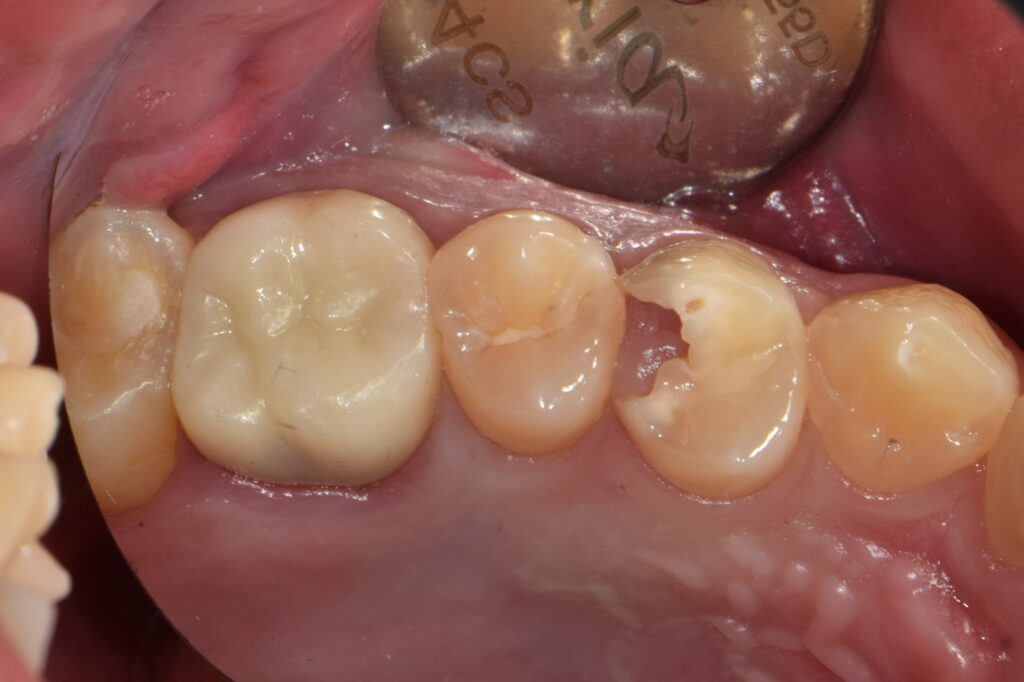
The gum had invaded the interior of the tooth to such an extent that it bled on contact, making it nearly impossible to distinguish where the tooth ended and the gum began.
2. Gum Tissue Removal and Crown Lengthening Surgery
To begin treatment, we first needed to identify the boundaries of the tooth. The overgrown gum tissue was carefully removed, and where necessary, the underlying bone was reshaped to expose the tooth margin above the gum line — a procedure known as crown lengthening surgery.
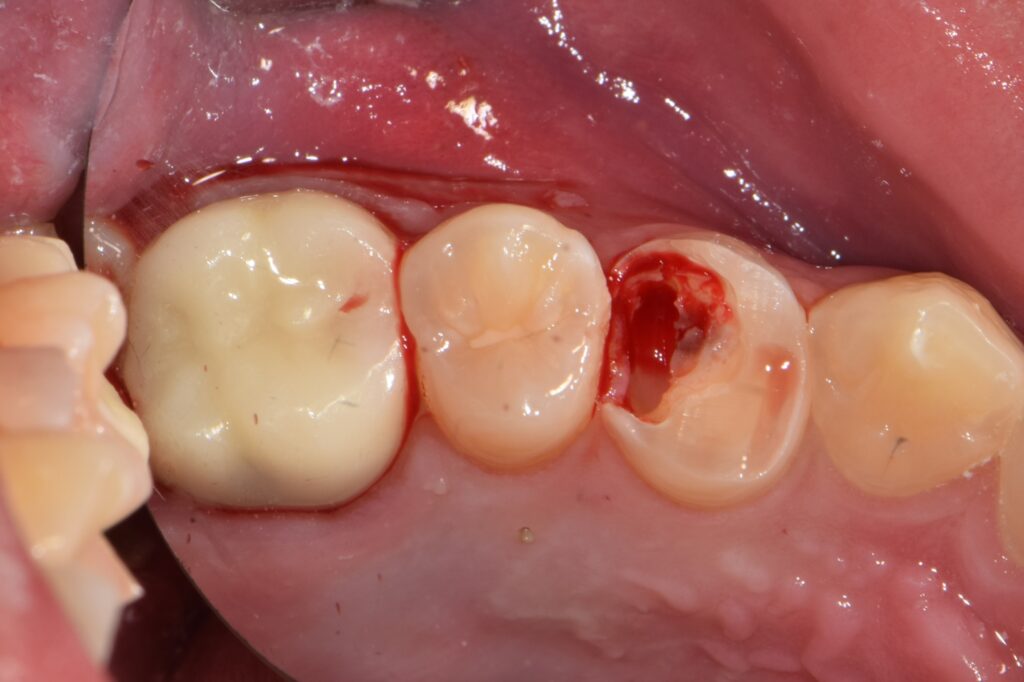
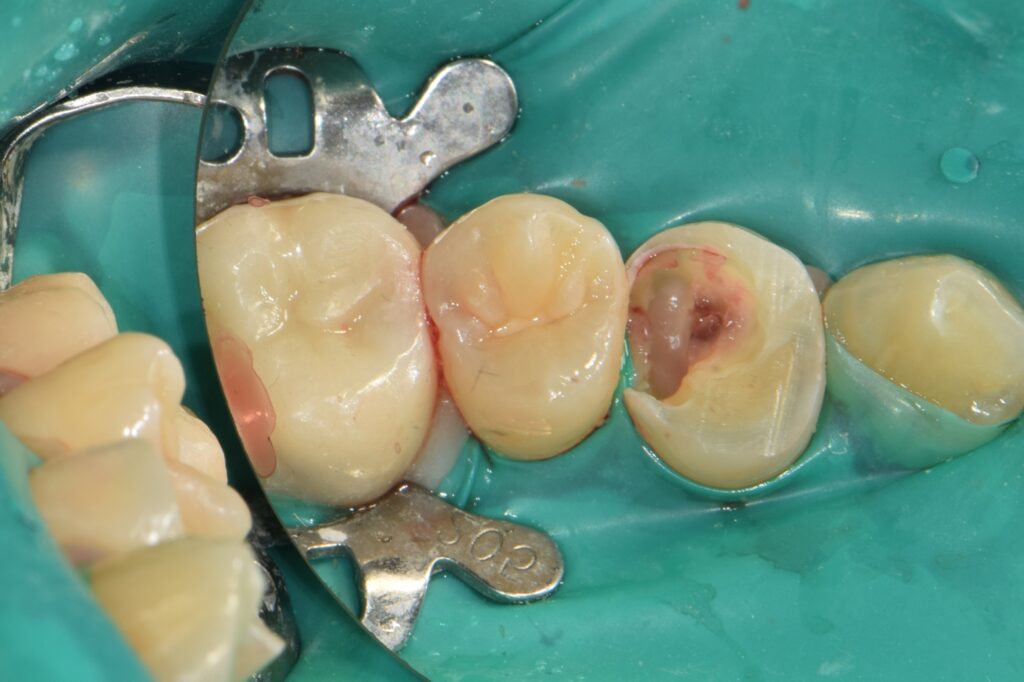
Once the gum was cleared, the previously hidden root and margin of the tooth were finally revealed. The tooth was now ready for treatment to begin.
3. Rubber Dam Placement and Resin Wall Construction (Key Step)
This is the highlight of today's treatment. Root canal treatment requires a sealed environment where disinfectant solution does not leak and saliva cannot enter. However, with the tooth walls completely destroyed, achieving this seal was impossible.
The solution was to place a rubber dam and then build a rigid resin wall around the remaining tooth structure.
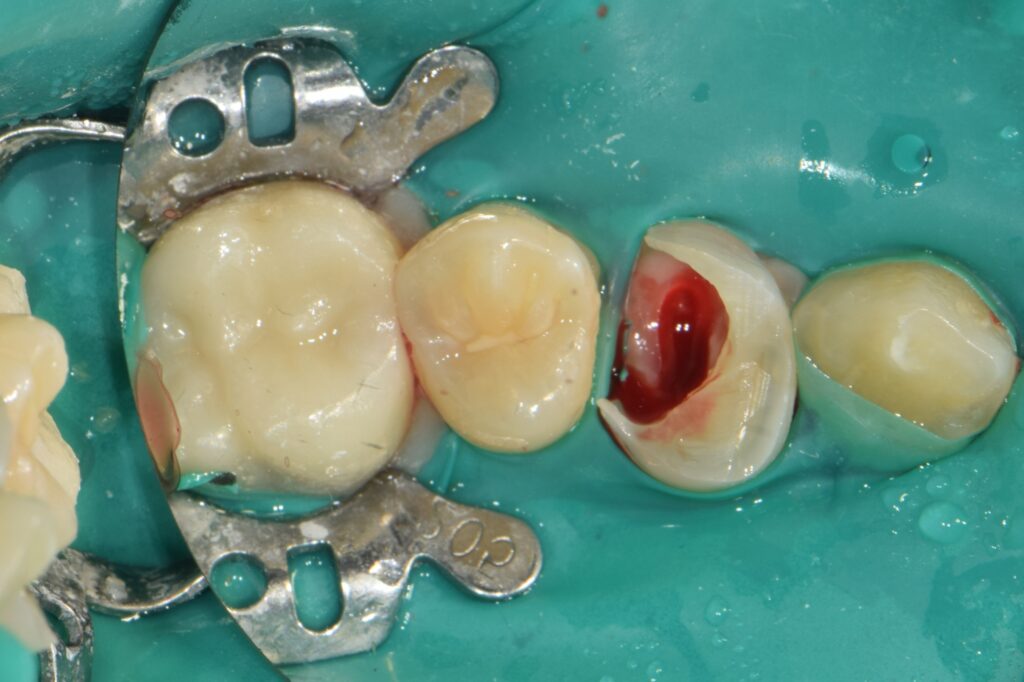
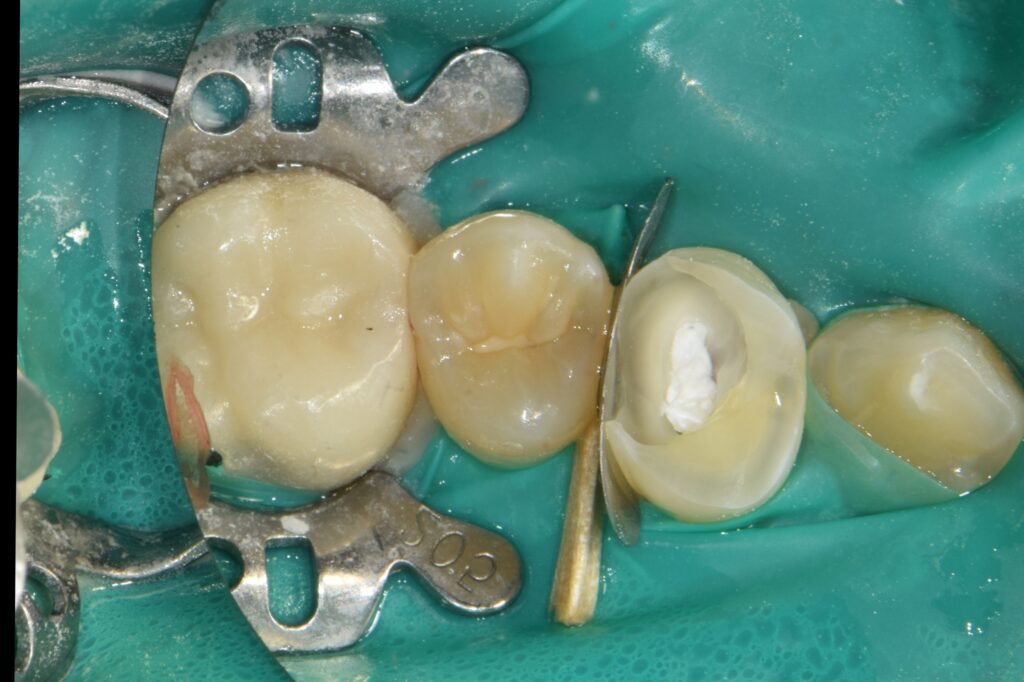
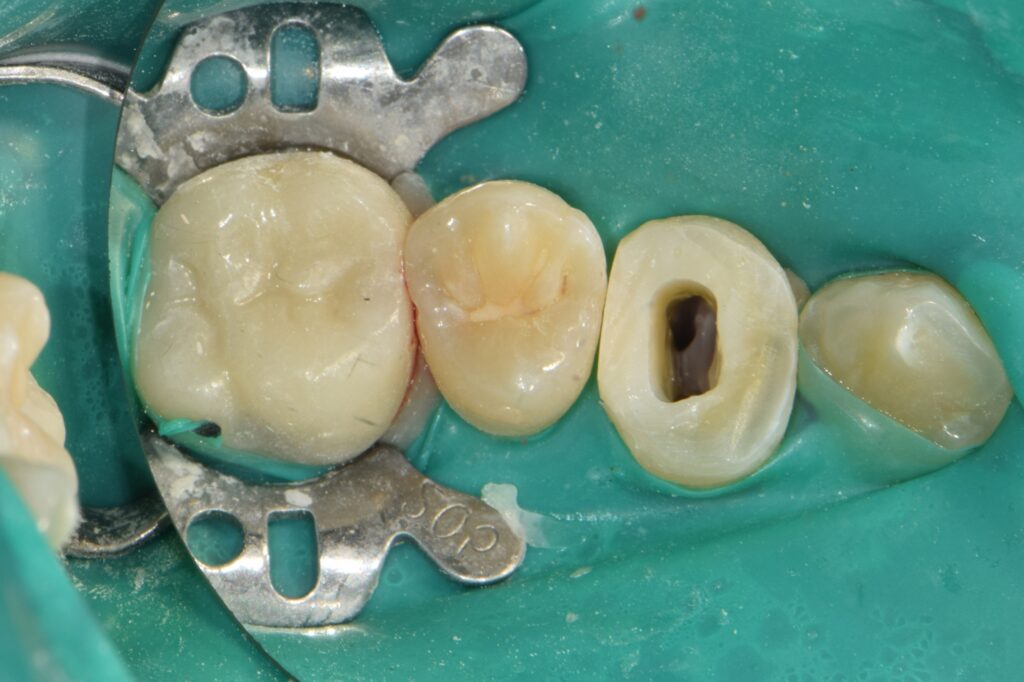
"Why go through all this complexity?" This resin wall is essential for placing the rubber dam, and the rubber dam is essential for completing root canal treatment in a bacteria-free, sterile environment. Skipping this step out of convenience significantly increases the risk of bacterial contamination during treatment, ultimately leading to tooth extraction.
4. Root Canal Treatment and Zirconia Crown Restoration (After)
Thanks to the resin wall, root canal treatment was completed meticulously in a sterile environment. The tooth was then reinforced, and a zirconia crown was placed as the final restoration.
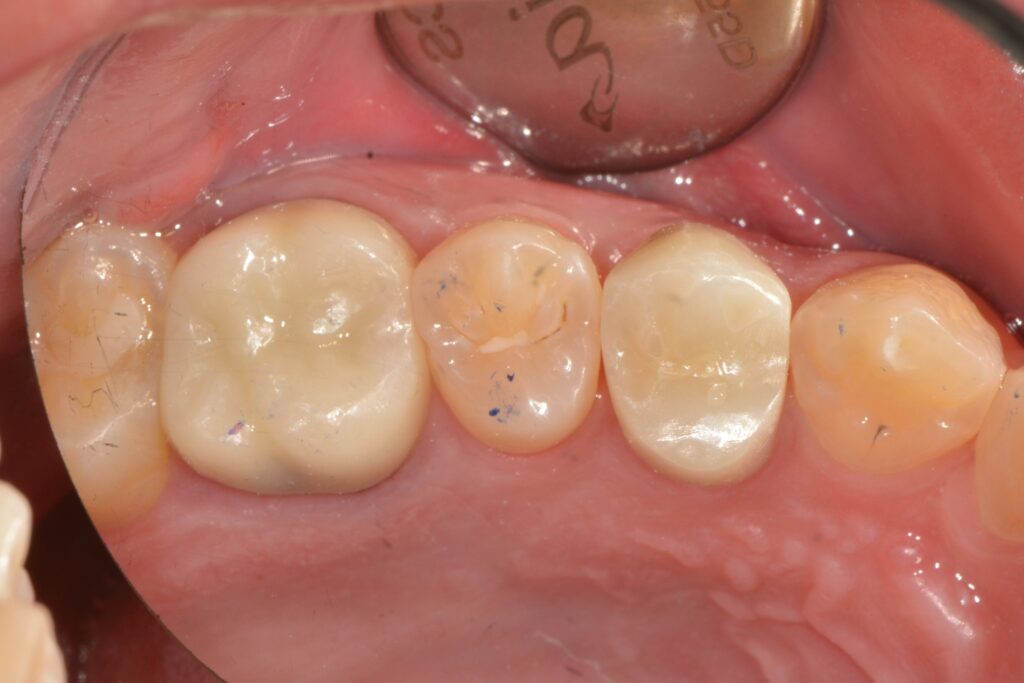
Here is the completed result. The initial condition of gum overgrowth and bleeding is completely gone, replaced by a strong and beautiful tooth.
[Do Not Give Up on Your Natural Teeth]
The case presented today is, in fact, a very labor-intensive and time-consuming treatment from the clinician's perspective. Performing crown lengthening surgery, building resin walls for rubber dam placement — compared to all of this, simply extracting the tooth and placing an implant could be much easier.
However, no matter how advanced implants have become, they can never be better than your own natural tooth.
At TTE Dental Clinic, no matter how challenging the situation may appear, if there is even a 1% chance of saving the tooth, we adhere to textbook principles (rubber dam, adhesion, resin wall) to protect your natural teeth to the very end.
임상 사진
(8장)관련 증례
Same Cavity, Different Outcomes — How Dental Microscopes Transform Every Treatment
Minimally Invasive Resin Build-up Is the Answer for Pediatric Cavities — Treating Extensive Secondary Caries in a 9-Year-Old