It Looks Fine on the Outside but Is Decaying Inside? Treating Interproximal Caries with Resin Build-up Instead of an Inlay
A case of interproximal caries (decay between teeth) treated with minimally invasive resin build-up instead of an inlay. Rubber dam isolation, precision matrix placement, and layered resin application to preserve the natural tooth.
Patient Information
Dental floss shredding, food impaction between teeth when eating meat
Hello, this is Dr. Kang Seokhoon, Director of TTE Dental Clinic — where preserving natural teeth is our top priority.
"Doctor, my dental floss keeps shredding every time I use it." "Whenever I eat meat, food gets stuck so tightly between my teeth that it hurts."
When patients visit with these symptoms, the culprit is almost always interproximal caries (decay between teeth). The chewing surface may look perfectly normal, but decay has started on the side surface where adjacent teeth touch and has spread inward.
Today, we will show you how we treated this with a minimally invasive resin build-up — precisely removing only the decayed area and restoring it — instead of an inlay that would require grinding away healthy tooth structure.
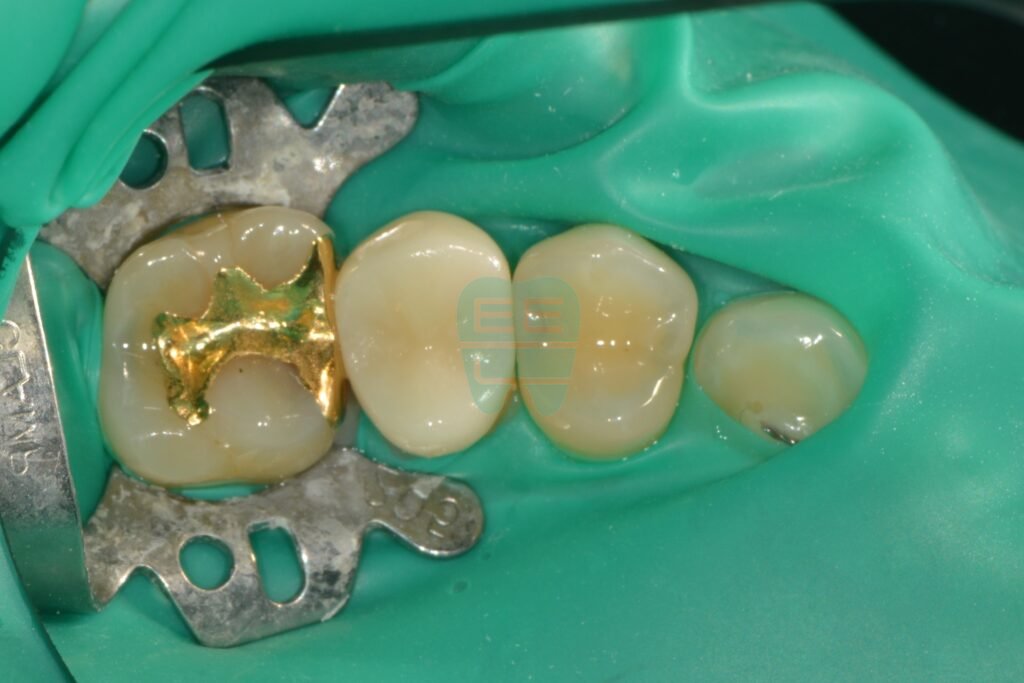
[Treatment Process]
1. Rubber Dam Placement and Caries Confirmation
The first step in any caries treatment is thorough isolation. A rubber dam is placed to block moisture and bacteria, then the caries is exposed. What appeared to be a small opening turned out to have significant decay progressing beneath the surface.
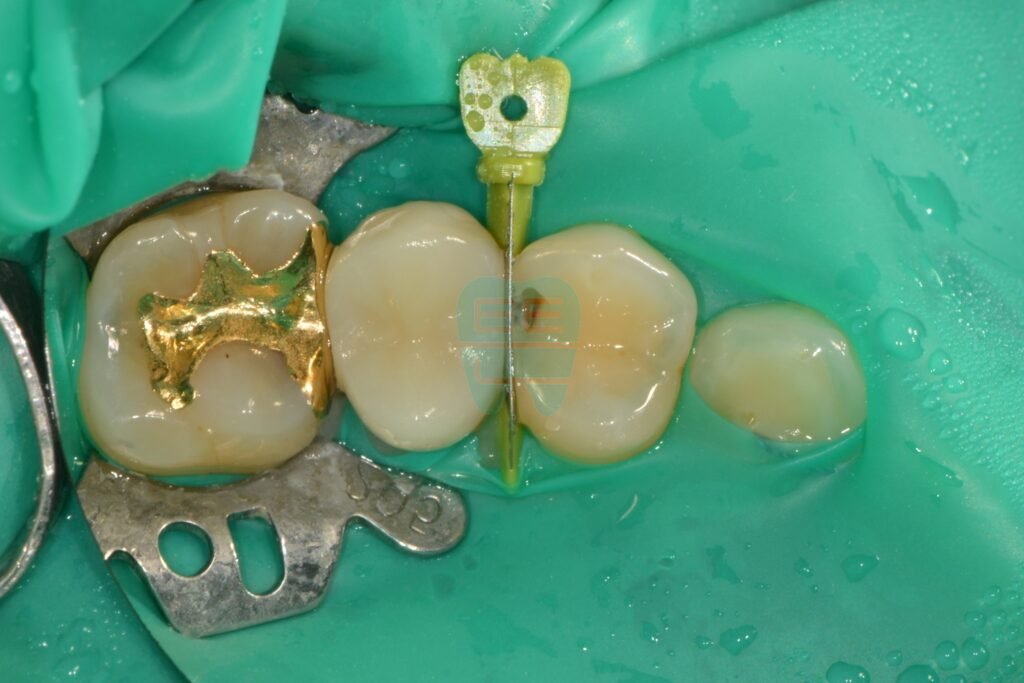
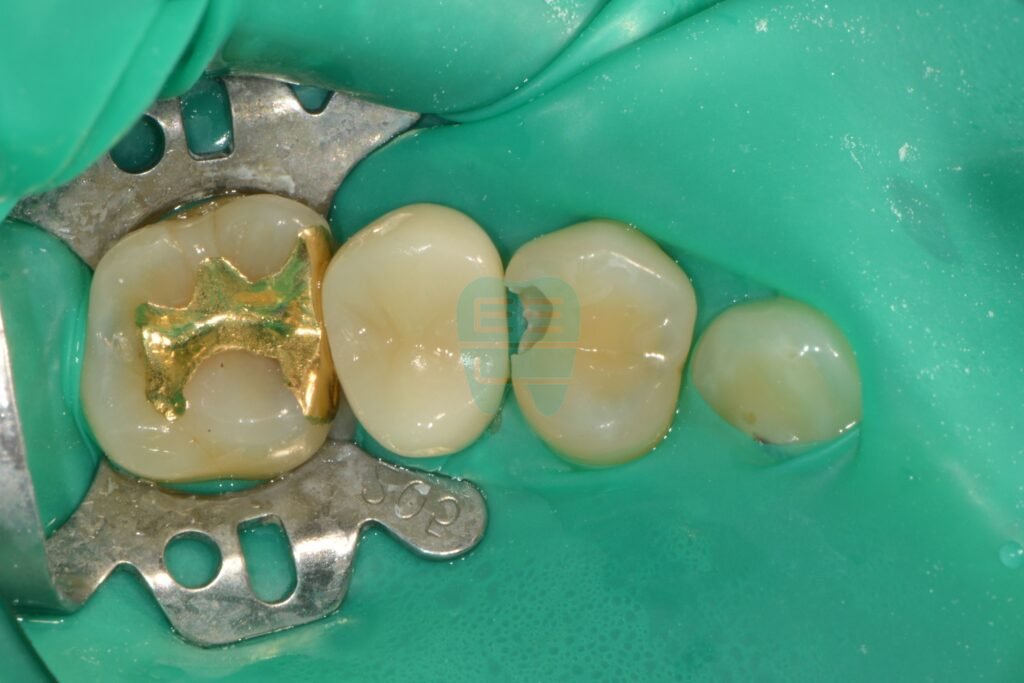
Here is the tooth after caries removal. If we had chosen an inlay restoration, we would have needed to widen the cavity significantly — grinding away healthy tooth structure to create access. But with resin build-up, that is unnecessary. Only the decayed portion is removed, with minimal tooth structure loss.
2. Precision Matrix Placement (Matrix System)
The key to interproximal caries treatment lies in how naturally the missing side wall is restored. A careless filling creates gaps between teeth, leading to more food impaction and eventually gum inflammation.
We use a specially contoured band (matrix) that matches the tooth's curvature, secured with a Garrison Strata-G ring system.
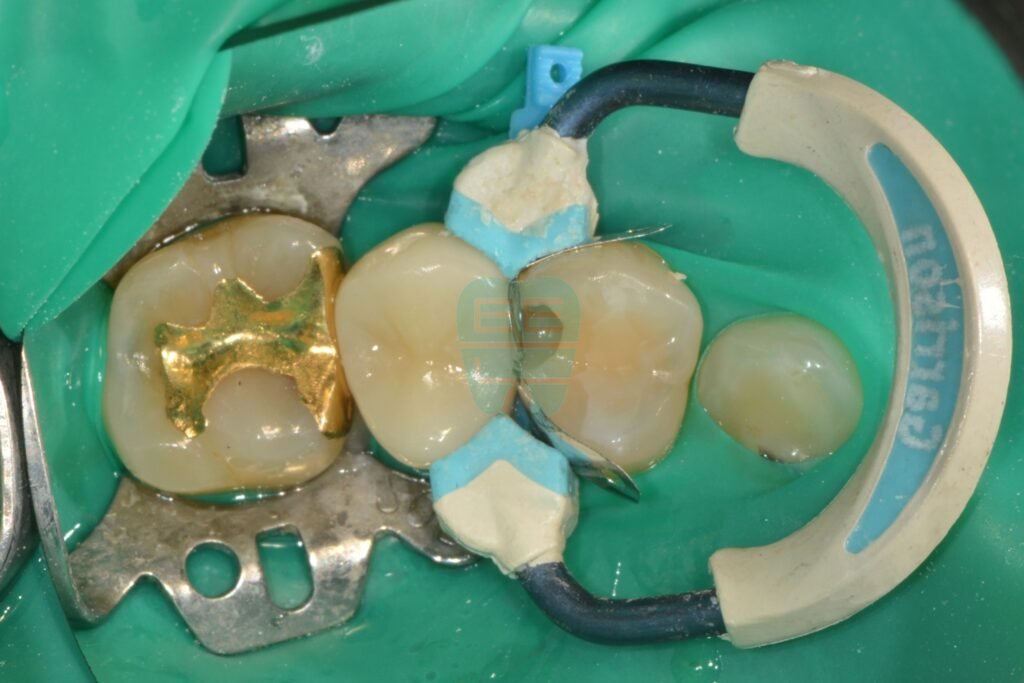
This step is critical. The contact point — where adjacent teeth press firmly together — must be perfectly recreated so that food no longer gets trapped after treatment.
3. Resin Build-up (Layering)
Rather than filling the space all at once, high-strength composite resin is applied in thin, incremental layers. The original occlusal anatomy — every ridge and groove — is faithfully reproduced.
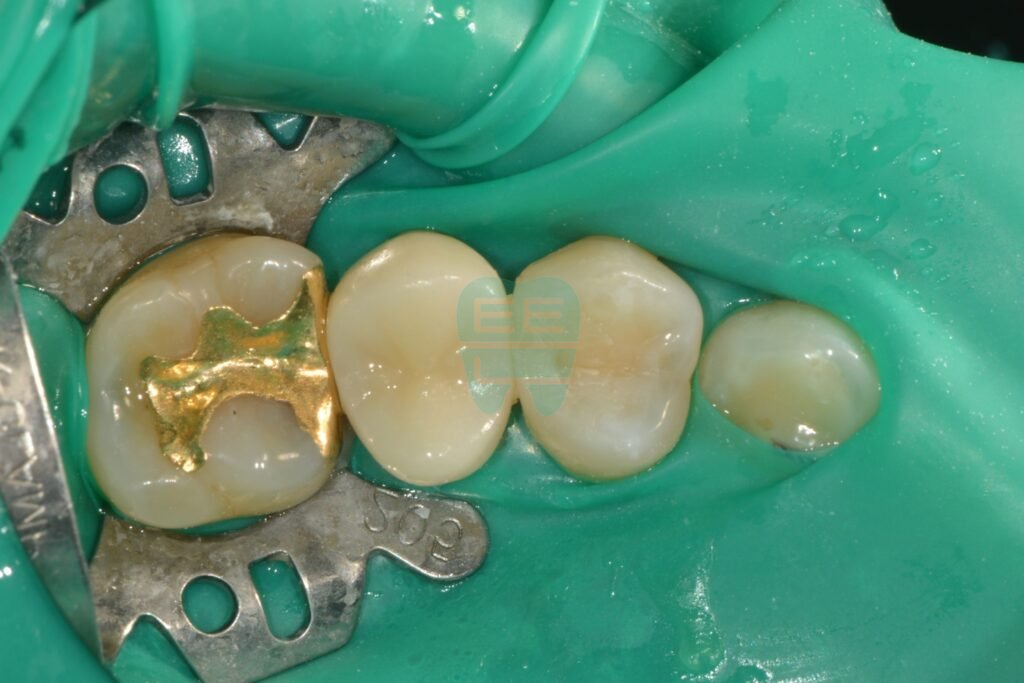
This is not simply plugging a hole — it is a process of sculpting the anatomical form of the tooth back to its original shape.
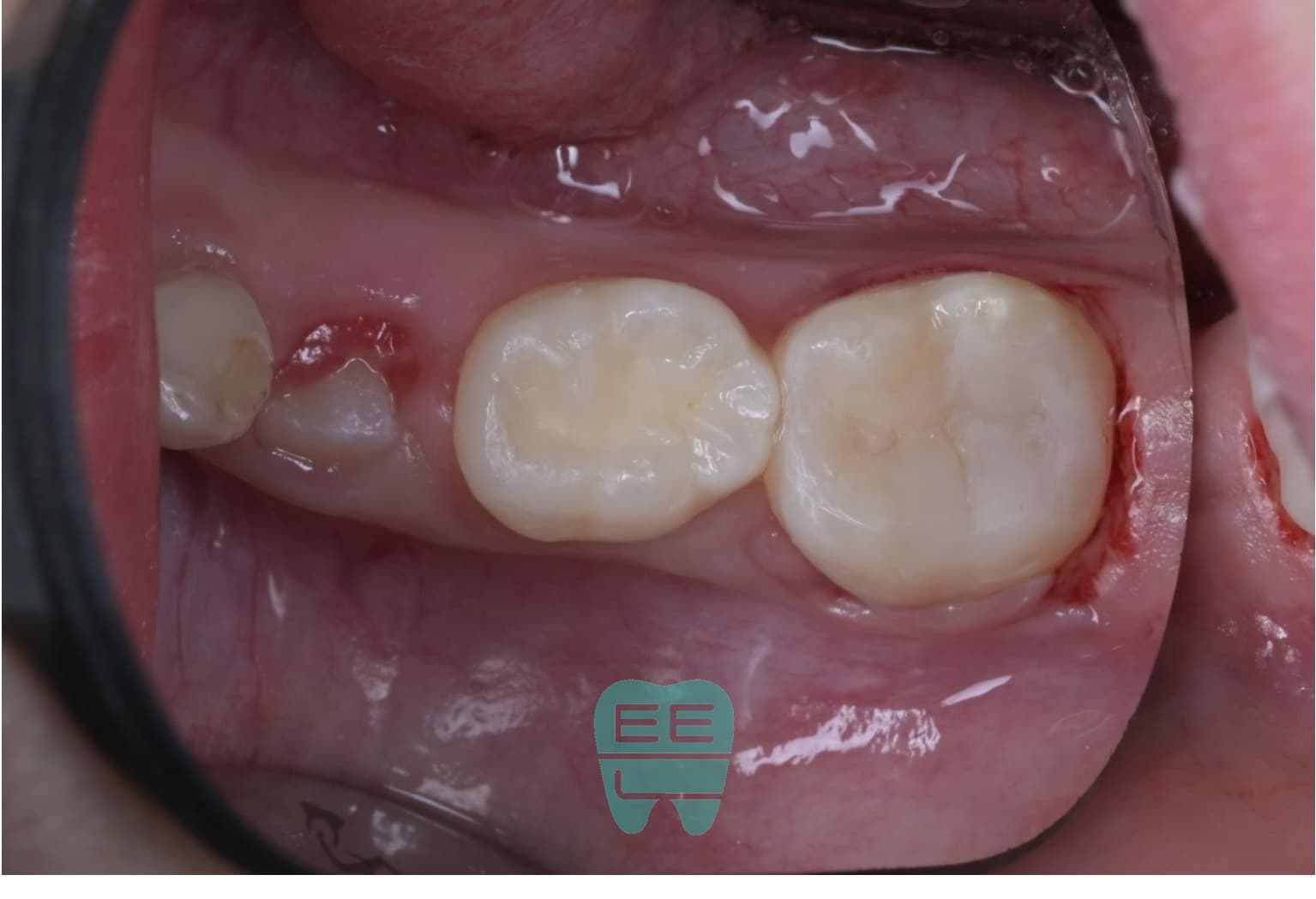
4. Treatment Complete (After)
Here is the final result after removing the rubber dam. Can you tell which tooth was treated?
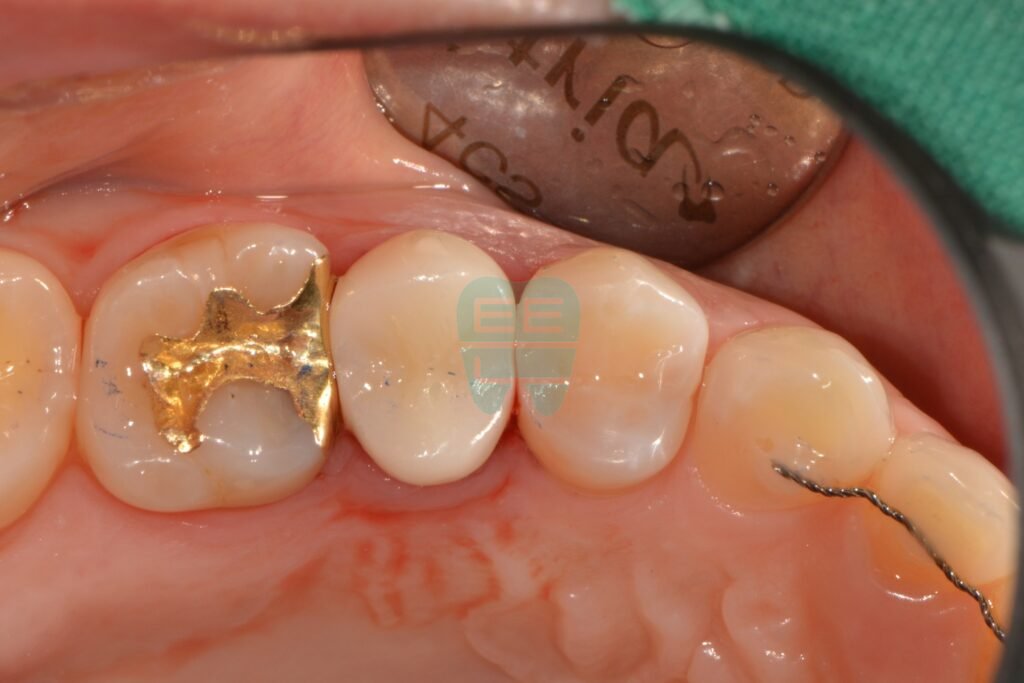
The restoration blends seamlessly with the surrounding tooth structure. When dental floss is passed through, it catches with just the right amount of resistance — proof that food will no longer get trapped.
[The Best Way to Protect Your Natural Teeth]
Interproximal caries is often discovered late, by which point root canal treatment may be needed. However, when caught early, a resin build-up — as demonstrated today — can restore the tooth with dramatically less tooth structure removal.
"We never touch healthy tooth structure unnecessarily." At TTE Dental Clinic, even when it takes more time and effort, we adhere to the principle of minimally invasive treatment to extend the lifespan of your teeth.
Disclaimer
All clinical photographs were taken with the patient's consent under standardized conditions. Treatment outcomes may vary by individual, and complications may occur.
임상 사진
(6장)관련 증례
Same Cavity, Different Outcomes — How Dental Microscopes Transform Every Treatment
Minimally Invasive Resin Build-up Is the Answer for Pediatric Cavities — Treating Extensive Secondary Caries in a 9-Year-Old