Lower First Molar Extensive Cavity — Microscope Resin Build-up
A patient with pain from secondary caries under an old amalgam restoration was treated with minimally invasive cavity removal using AquaCare under dental microscope, followed by direct resin build-up to preserve the tooth.
Patient Information
30s
Female
#36 Pain on chewing, sensitivity to cold/hot
Chief Complaint and History
The patient presented with pain on chewing on the left lower side and sensitivity when consuming cold food or beverages. She had a history of amalgam restoration on tooth #36 at another clinic approximately 10 years prior.
Diagnosis
Clinical and radiographic examination revealed extensive secondary caries beneath the existing amalgam restoration on tooth #36.
- Percussion test: Mildly positive
- Cold test: Positive (transient pain, resolved upon stimulus removal)
- Pulp status: Diagnosed as reversible pulpitis
A key diagnostic criterion for reversible pulpitis is that the pain subsides after the stimulus is removed during the cold test. Unlike irreversible pulpitis, the pulp (nerve) can be preserved with appropriate treatment.
Treatment Plan
- Removal of the existing amalgam restoration
- Selective caries removal using AquaCare under dental microscope
- Glass ionomer liner placement (pulp protection for deep areas)
- Direct composite resin build-up (incremental layering technique)
Treatment Process
Step 1. Amalgam Removal
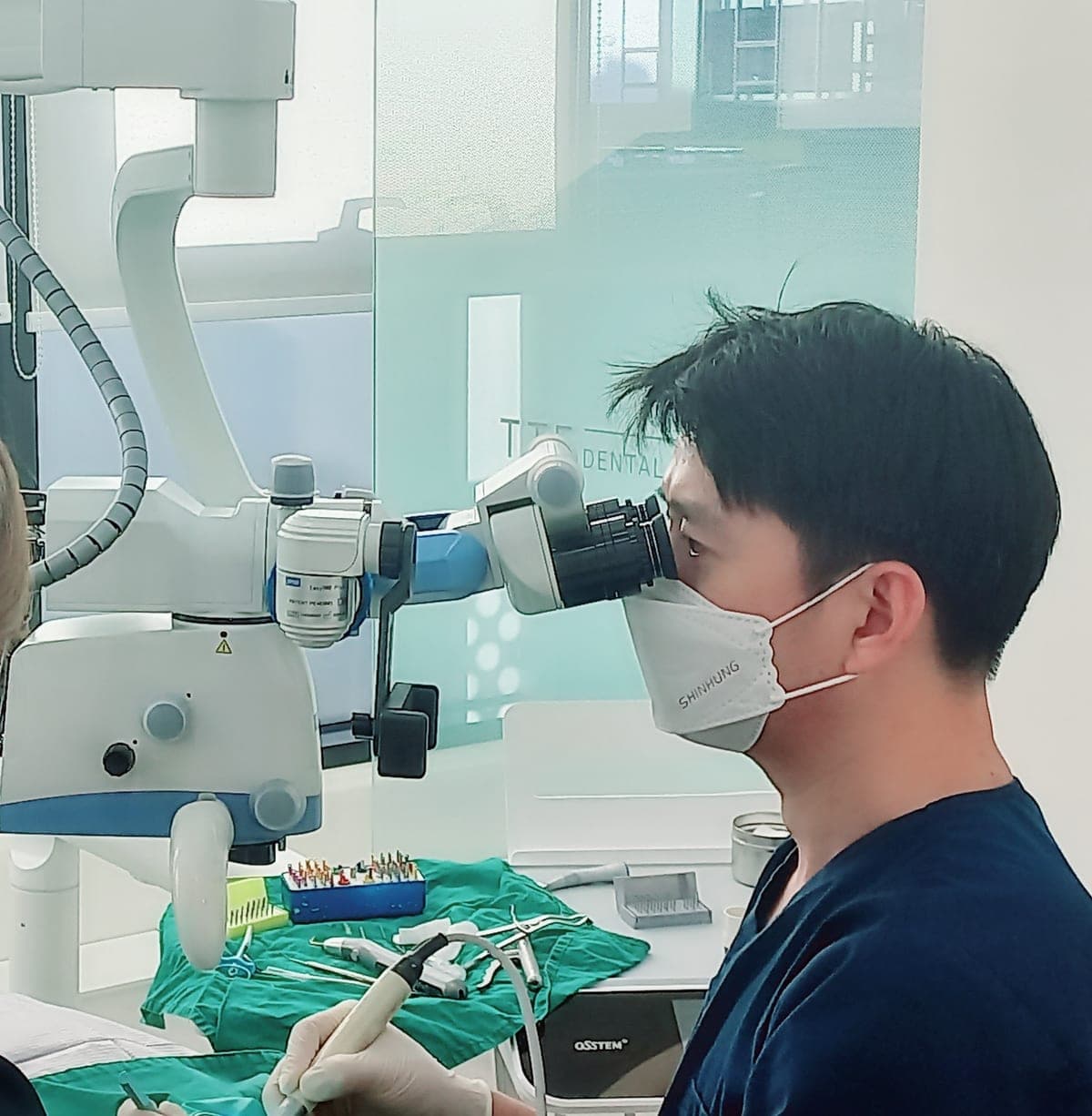
The existing amalgam restoration was carefully removed under the dental microscope (x12.5 magnification). Extensive discoloration and softened dentin were observed beneath the amalgam.
Step 2. Selective Caries Removal with AquaCare
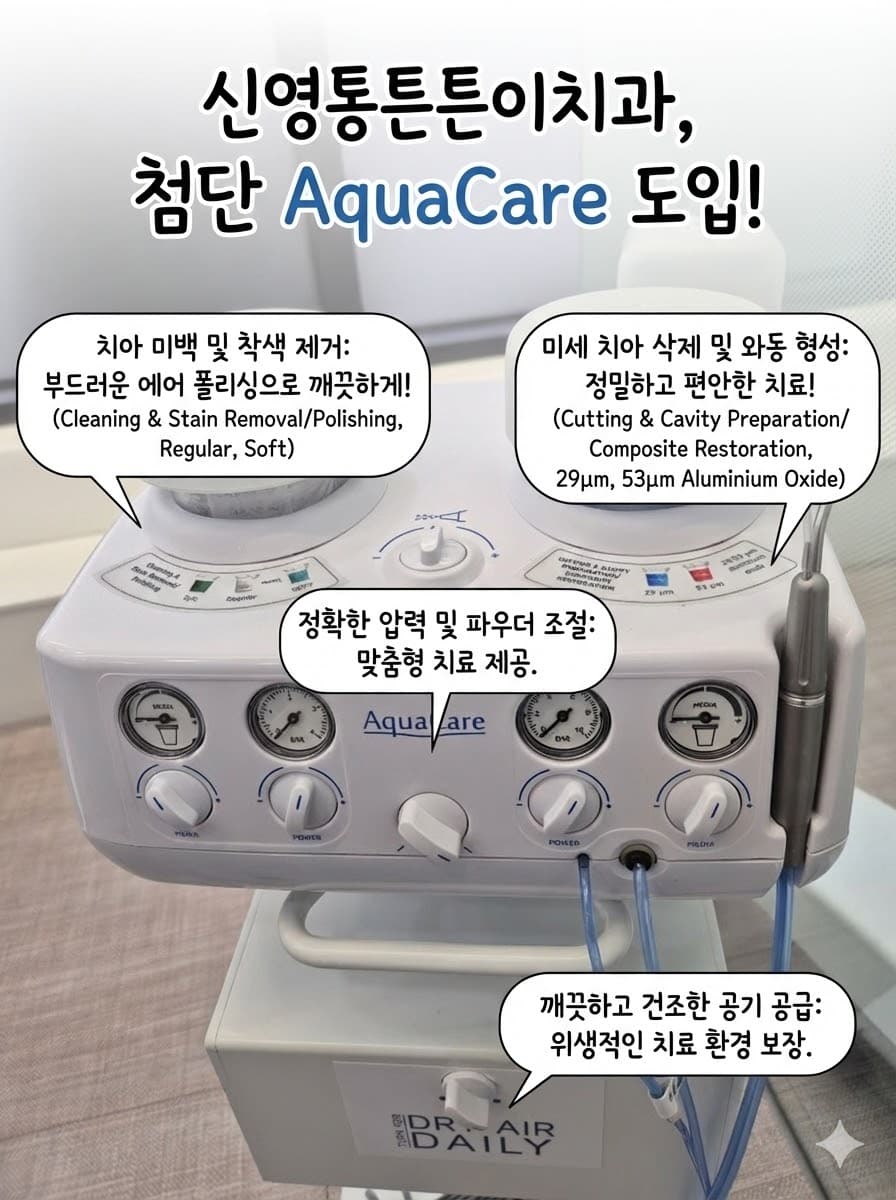
AquaCare (micro-powder air abrasion system) was used to selectively remove only the infected dentin while preserving healthy tooth structure.
Unlike high-speed handpieces, AquaCare minimizes damage to healthy tooth structure while selectively removing only infected tissue, making it highly advantageous for tooth preservation.
Step 3. Lining and Bonding
Glass ionomer cement was applied as a liner at the deep cavity floor to protect the pulp, followed by selective etching and a universal adhesive system.
Step 4. Direct Resin Build-up
Under the dental microscope (x16 magnification), composite resin was placed in increments of 2 mm or less using the incremental layering technique to replicate the natural anatomical form of the tooth.
Treatment Results
Before
After
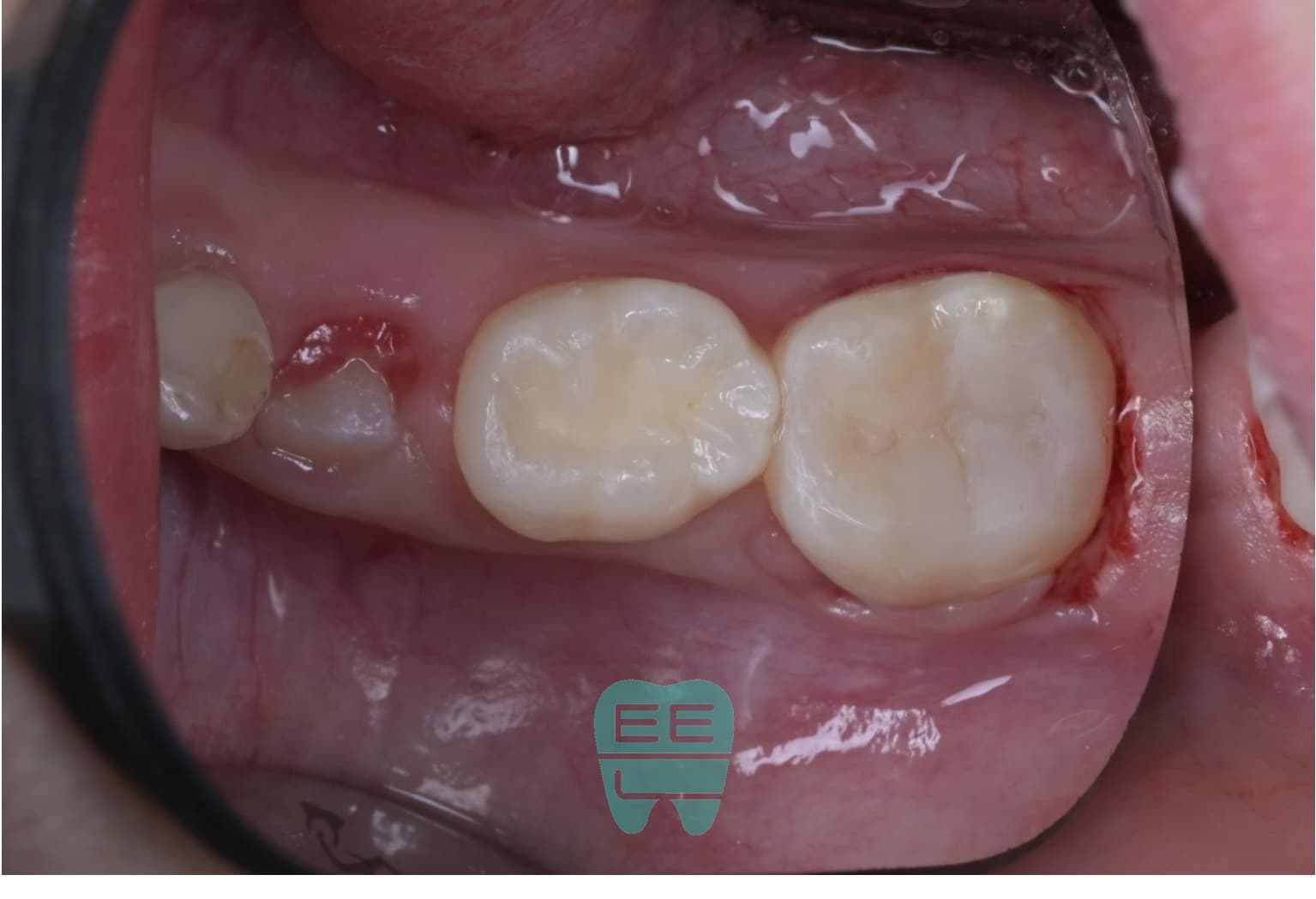
Left: Before treatment (amalgam state) / Right: After resin build-up completion
- Esthetic restoration in harmony with natural tooth color
- Normal occlusion confirmed after occlusal adjustment
- 1 week post-op: Sensitivity to cold/hot stimuli resolved
- 3 months post-op: No pain on chewing, normal function restored
Discussion
This case demonstrates the minimally invasive treatment of secondary caries beneath an existing amalgam restoration, utilizing a dental microscope and AquaCare.
The dental microscope enabled precise identification of the extent of caries, and AquaCare allowed selective removal of infected tissue while maximally preserving healthy tooth structure.
The reasons for choosing direct resin build-up over a crown restoration were as follows:
- Sufficient remaining tooth structure, making additional tooth reduction for a crown unnecessary
- Marginal integrity achievable through precision restoration under the dental microscope
- Patient's esthetic expectations met
Not every cavity requires a crown. When sufficient tooth structure remains and precise restoration is possible under a dental microscope, direct resin build-up can be a more favorable option for tooth preservation.
관련 증례
Same Cavity, Different Outcomes — How Dental Microscopes Transform Every Treatment
Minimally Invasive Resin Build-up Is the Answer for Pediatric Cavities — Treating Extensive Secondary Caries in a 9-Year-Old